July 28, 2012

Ford Classic in India


Ford India has launched the new Ford Classic Titanium version of the Ford Classic sedan car (earlier was known as Fiesta Classic) .  The unique feature of this model is up to 34.38 km/L mileage (diesel) which is leaps higher than what other diesel sedan cars offer .

Ford Classic Petrol
  • Ford Classic 1.6 Duratec LXi
  • Ford Classic 1.6 Duratec CLXi
  • Ford Classic 1.6 Duratec Titanium
Ford Classic Diesel
  • Ford Classic 1.4 TDCi LXi
  • Ford Classic 1.4 TDCi CLXi
  • Ford Classic 1.4 TDCi Titanium
specifications :
  • Physical specs
    • Dimensions : 4282x1686x1468 mm
    • Wheel Base : 2486 mm
    • Ground clearance : 168 mm
    • Kerb weight : 1150 kg
    • Turning radius : 4.90 m
    • Fuel Tank Capacity : 45 L
    • Boot space : 430 L
  • Engine
    • Diesel Engine
      • Type : 4 Cyl. In-Line, 8-V SOHC
      • Construction : Aluminium Alloy
      • Fuel system : Advanced Common Rail
      • Displacement : 1399 cc
      • Compression Ratio : 18:1
      • Max. power : 68 ps @ 4000 RPM
      • Max. torque : 160 Nm @ 2000 RPM
    • Petrol Engine
      • Type : 4 Cyl. In-Line, 16-V DOHC
      • Construction : Aluminium Alloy
      • Fuel system : SEFI
      • Displacement : 1596 cc
      • Compression Ratio : 9.75:1
      • Max. power : 101 ps @ 6500 RPM
      • Max. torque : 146 Nm @ 3400 RPM
  • Suspension
    • Front : Independent McPherson struts with offset coil spring
    • Rear : Semi-independent heavy duty twist-beam with twin tube dampers
    • Shock absorbers : Gas Filled
  • Brakes
    • Front : Ventilated Discs
    • Rear : Self Adjusting Drums
  • Tyres
    • Tyres : 175/65 R14
    • Wheel Size : 14-inch Alloy (in Titanium version only)
Ford Classic Price in India
Ford Classic Petrol Price in Delhi
  • Ford Classic 1.6 Duratec LXi – Rs.5,27,000
  • Ford Classic 1.6 Duratec CLXi – Rs.5,49,000
  • Ford Classic 1.6 Duratec Titanium – Rs.6,86,500
  • Ford Classic 1.6 Duratec SXi – Rs.7,29,000
Ford Classic Diesel Price in Delhi
  • Ford Classic 1.4 TDCi LXi – Rs.6,57,000
  • Ford Classic 1.4 TDCi CLXi – Rs.6,98,000
  • Ford Classic 1.4 TDCi Titanium – Rs.7,82,900
  • Ford Classic 1.4 TDCi SXi – Rs.8,19,000

July 26, 2012

Audi R8 2013


Audi has made its R8 high-performance sports car even more attractive and dynamic. The Audi R8 V10 plus is a new top model in the model series, with a totally new 7-speed S tronic. The LED headlights and the new rear indicator lights with dynamicized display are standard equipment on all variants.


4.44 meters (14.44 ft) long, 1.90 meters (6.23 ft) wide and only 1.25 (4.10 ft) meters high (Spyder: 1.24 meters (4.07 ft)) - the broad Audi R8, developed and built by quattro GmbH, stands firmly on the road, ready to pounce. New details lend its design even more acuity. The single-frame grille with the beveled upper corners is painted high-gloss black, with horizontal chrome inserts adorning the struts on the V10 variants. The bumper is also new, with the air inlets bearing three crossbars each. As an option, Audi installs a front splitter made of carbon fiber reinforced plastic (CFRP). The splitter is standard on the new Audi R8 V10 plus.

LED headlights with a new technology are now standard on all variants of the Audi R8. The light-emitting diodes for the high and low beams have been placed above and below the strip-shaped daytime running lights, which are specially actuated to serve as indicators. In addition, static turning lights are integrated in the headlights.

The housings of the outside mirrors and the side blades, the lateral air inlets on the Coupé, are made from CFRP on the new Audi R8 V10 plus top model. In the 10-cylinder variants the blades extend outwards farther than on the V8 and have special edging; small marks of distinction also occur at the sills. The vent louvers next to the rear window have an aluminum look on the Audi R8 V10 Coupé (matt black on the R8 V8 Coupé and R8 V10 plus). As an option, LEDs illuminate the engine compartment; in the Audi R8 V10 plus this illumination as well as a partial CFRP lining for the engine compartment are standard.

The LED lights dominate the rear of the Audi R8. One innovation from Audi is the indicator light with dynamic display at the bottom edge of the lamp - its light always proceeds towards the outside, in the direction the driver wishes to turn. Above the high-gloss black area between the vent openings sits the new badge - the letter "R" resting partly on a red diamond, the Audi Sport signature. The large diffusor, optionally CFRP (standard on the R8 V10 plus), has been pulled far upwards. In all engine versions the exhaust system terminates in two round, glossy tailpipe trim sections, painted black on the Audi R8 V10 plus.

Audi offers the R8 in the two solid colors Ibis White and Brilliant Red, in four metallic shades and with five pearl effect / crystal effect coatings. For the Audi R8 V10 plus a matt effect color is available as an exclusive feature. The side blades on the Coupé come in eight colors, while the soft top of the R8 Spyder comes in black, red or brown.

The R8 embodies Audi's full expertise in ultra-lightweight design. The aluminum body with the Audi Space Frame (ASF) weighs only 210 kilograms (462.97 lb) on the Coupé, and 216 kilograms (476.20 lb) on the Spyder. The unladen Audi R8 V8 Coupé with manual transmission registers just 1,560 kilograms (3439.21 lb) on the scales, while the open-top sports car weighs 1,660 kilograms (3659.67 lb). The Audi R8 V10 plus, available only as a coupé, brings the needle to 1,570 kilo­grams (3461.26 lb). Adjustable bucket seats with glass fiber reinforced plastic (GFRP) chassis, less use of insulating materials, special light alloy wheels and chassis components, including the standard ceramic brakes, as well the CFRP add-on parts at the body all contribute to lowering the weight.

On the Audi R8 Spyder the lid on the soft top compartment and the side parts are also CFRP. The elegant, lightweight fabric top, with its largely aluminum and magnesium linkage, is the crowning touch to the ultra-lightweight design. The top opens and closes electrohydraulically in 19 seconds, and during driving at up to 50 km/h (31.07 mph). The heated window pane in the bulkhead between the passenger and engine compartments stands apart from the soft top; the window can be retracted and extended by a switch and also serves as a wind deflector. In case of a pending rollover, two strong, spring-tensioned sections shoot upwards from the seats.

As in car racing, the aerodynamics of the Audi R8 has been optimized for propulsion. The underfloor contains five NACA nozzles, along with two diffusors in the front section, which increase the propulsion at the front axle. The drag coefficient is 0.35 or 0.36 depending on the engine version and body shape; the frontal area measures 1.99 m2 (21.42 ft2).

The engines are assembled by hand. The V8 with 4,163 cc displacement and the V10 with its 5,204 cc displacement are captivating, naturally aspirated heavy-duty engines packed with power. The interplay with the new 7-speed S tronic has reduced CO2 emissions by up to 22 grams/km (35.41 g/mile) and decreased the sprint from zero to 100 km/h (62.14 mph) by three-tenths of a second. Both engines are compact and comparatively lightweight. The crankcase is an aluminum-silicon alloy; the bed plate structure provides high rigidity. The dry-sump lubrication allows low positioning of the engines; the pressure recirculation pump operates load-dependently, for increased efficiency.


The FSI direct fuel injection system allows a high compression of 12.5 : 1. Four adjustable camshafts control the valves. At low load and engine speed, flaps in the intake ducts bring about a precise, cylindrical rotation of the incoming air. The exhaust system is designed for low back pressure. The two tailpipes contain flaps; they open during sharp acceleration to produce a fuller sound.

The 4.2 FSI engine produces 316 kW (430 hp) at 7,900 rpm, with a torque of 430 Nm (317.15 lb-ft) between 4,500 and 6,000 rpm. The unit accelerates the Audi R8 Coupé with S tronic from rest to 100 km/h (62.14 mph) in 4.3 seconds and to a top speed of 300 km/h (186.41 mph) (with manual transmission: 4.6 seconds and 302 km/h (187.65 mph)). For the Audi R8 V8 Spyder the corresponding values are 4.5 and 4.8 seconds, respectively, and also 300 km/h (186.41 mph). On average the R8 V8 quattro as a coupé with S tronic consumes 12.4 liters of fuel per 100 km (18.97 US mpg).

The V10 engine provides a torque of 530 Nm (390.91 lb-ft) at 6,500 rpm, with 386 kW (525 hp) at 8,000 rpm. Its crankshaft is a common-pin design, yielding alternating ignition intervals of 54 and 90 degrees. This design combines maximum rigidity and low weight, while at the same time generating the unique car racing-like sound of the V10.

The Audi R8 V10 Coupé with S tronic accelerates from zero to 100 km/h (62.14 mph) in 3.6 seconds and reaches a top speed of 314 km/h (195.11 mph). With manual transmission the values are 3.9 seconds and 316 km/h (196.35 mph). The Audi R8 V10 Spyder with S tronic completes the standard sprint in 3.8 seconds and has a top speed of 311 km/h (193.25 mph) (with manual transmission: 4.1 seconds and 313 km/h (194.49 mph)). The average consumption rate of the Audi R8 V10 Coupé with S tronic lies at 13.1 liters of fuel per 100 km (17.96 US mpg).

The new top model of the model series is the Audi R8 V10 plus. Developing 404 kW (550 hp), its maximum torque is 540 Nm (398.28 lb-ft) at 6,500 rpm. With S tronic, the Audi R8 V10 plus, available only as a coupé, catapults from zero to 100 km/h (62.14 mph) in 3.5 seconds and achieves a top speed of 317 km/h (196.97 mph); the average fuel consumption rate is 12.9 liters per 100 km (18.23 US mpg). The key data with manual transmission are 3.8 seconds, 319 km/h (198.22 mph) and 14.9 liters (15.79 US mpg).


Two power transmission systems are available for the overhauled Audi R8. The manual 6-speed transmission, with its lever leading into an open stainless steel gate, is standard on the V8 and optional on the V10. The new 7-speed S tronic - optional on the V8 and standard on the V10 - spaces the gears closely in a sporty mode; the final drive position has a wide gear ratio. The dual clutch transmission can be shifted at the selector lever or at the steering wheel paddles; a sports mode is alternatively available. At the press of a button the launch control manages starting at an increased initial engine speed and with optimal tire slip.

The new 7-speed S tronic, with a three-shaft layout, is less than 60 centimeters (23.62 inches) in length. Two multi-plate clutches lying behind one another (a new feature), serve two mutually independent sub-transmissions; gears are shifted directly as the clutches alternately open and close. Gearshifting occurs practically without interruption of tractive power within hundredths of a second, and so dynamically, smoothly and comfortably as to be hardly noticeable.

From the 7-speed S tronic the propeller shaft runs through the crankcase of the engine to the front axle, where a viscous coupling distributes the torque. In normal operation the coupling directs about 15 per cent of the torque to the front axle; when the rear wheels start to spin, a maximum additional 15 per cent flows to the front. A mechanical locking differential operates at the rear axle. The rear-load distribution of the forces ideally harmonizes with the mid-engined concept of the Audi R8. The axle-load distribution is 43 : 57 (front : rear), with small differences between the individual variants.

The chassis of the high-performance sports car employs technologies from car racing. Double wishbones forged from aluminum guide all four wheels. On the R8 V10 plus the springs and shock absorbers have been specially tuned and the camber values at the front axle adapted accordingly. The Audi magnetic ride adaptive damping is standard on the Audi R8 V10 and optional for the V8 variants; it offers a normal mode and a sports mode. The power steering delivers finely differentiated, super-sensitive feedback, with sporty, direct gear ratios.

The overhauled R8 rolls along on large wheels. The V8 engine versions have the standard wheel dimensions of 8.5 J x 18 at the front and 10.5 J x 18 at the rear, with tire sizes 235/40 and 285/35. On the V10 versions Audi mounts 19-inch wheels of widths 8.5 and 11 inches; the tires come in the sizes 235/35 and 295/30 respectively. The optional wheels have especially attractive designs - polished to a high gloss, with a titanium look or (on the R8 V10 plus) in black gloss.

The steel brake disks of the high-performance sports car are internally ventilated, perforated and joined to the aluminum disk bowls by pins. The new "Wave" design of the disks - the wavy exterior contour - lowers the weight overall by about two kilo­grams (4.41 lb) compared with round disks of the same dimensions. The aluminum brake calipers operate at the front wheels with eight pistons each, and at the rear wheels with four pistons each. In combination with the 19-inch wheels, Audi can provide optional carbon fiber ceramic brake disks (standard on the Audi R8 V10 plus). The electronic stabilization control system ESC offers a sports mode and can also be fully deactivated.


The Audi R8 is a sports car with excellent practical skills. The front luggage compartment has a capacity of 100 liters (3.53 cubic ft); the Coupé accommodates an additional 90 liters (3.18 cubic ft) behind the seats. The long wheelbase of 2.65 meters (8.69 cubic ft) affords generous space. The interior conveys a car racing atmosphere on the luxury level; its dominant feature is the monoposto - the long arc curve running around the cockpit in the area of the driver. The flattened rim of the optional, more contoured R8 leather-covered multifunction sports steering wheel bears the new R8 badge, which also appears at the gearshift or selector lever, at the door sill trims, in the instrument cluster and on the start screen of the on-board monitor.

The electrically adjustable sports seats are optional on the V8 engine versions and standard on the V10 variants. Depending on the model variant, the seat upholstery is an Alcantara/leather combination or Fine Nappa; on the Audi R8 Spyder a special pigmentation reduces heating from direct sunlight. Audi also offers optional bucket seats with prominent side sections for better lateral support (standard on the R8 V10 plus).

Numerous control and trim elements shine with subdued chrome strips or with black paint; the needles in the instrument cluster and the shift paddles have been slightly modified. The center console and the handbrake lever are covered with leather, adorned by delicate seams; in the V10 models the molding around the standard navigation system plus is also leather-covered.

With the diamond-stitched, Fine Nappa full-leather equipment level, the seats and the door trim feature quilted upholstery; for the Audi R8 Coupé a quilted Alcantara headlining is also available. More individualistic customers can choose between leather items in different colors, inlays in Carbon Sigma (standard on the R8 V10 plus) and piano finish black. A wide range of design, styling and leather packages from the Audi exclusive customization line is also available.


The Audi R8 V10 and the R8 V10 plus come with the navigation system plus and the Bang & Olufsen Sound System as standard on-board features. Other options for all R8 variants include a high-beam assistant, a stowage package, various travel case sets, a cell phone preparation, with belt microphone and voice control, and the parking system plus with reversing camera.

The overhauled Audi R8 will roll off the line to European customers at the end of 2012.

The base price is EUR 113,500 for the V8 Coupé, and EUR 124,800 for the Spyder. The V10 variants are listed at EUR 154,600 and EUR 165,900 respectively, while the Audi R8 V10 plus costs EUR 173,200.

July 24, 2012

The Bodygaurd Glove


It is equipped with a video camera and a stun gun to keep criminals at bay...


The Armor Sleeve Defuses confrontations and prevents potentially violent situations John B. Carnett


A robber is cornered in a dead-end alley. He turns to face the police officer pursuing him, ready to fight. He pauses. The officer’s left forearm is encased in ballistic nylon, and half a million volts arc menacingly between electrodes on his wrist. A green laser target lands on the robber’s chest. He puts his hands up; it’s a fight he can’t win.

For police and corrections officers, preventing and defusing confrontations can save lives, and that’s the premise behind the BodyGuard.
Equipped with a highvoltage stunner, video camera, laser pointer and flashlight, the armor sleeve is intended to prevent violent situations. The invention was designed by David Brown, a cameraman, editor and producer who makes a living filming musical acts such as Rage Against the Machine and Snoop Dogg, as well as behindthe-scenes movie footage for the actor Kevin Costner, a friend and BodyGuard investor.
Brown developed the concept for the device one evening in 2004, when he and some friends were discussing a recent mountain lion attack in a nearby Orange County park that had left one cyclist dead and another maimed. During an attack like that, Brown recalls thinking, even if you have a knife or other handheld weapon, you’re going to drop it. He wanted something that a person could deploy instinctually.


How It Works: Armored Glove: The breathable glove weighs less than three pounds and is encased by a hard shell that extends across the forearm. A pull pin preps the stunner (generated by four electrodes on the wrist), and a button at the palm activates it. Similar buttons trigger the laser pointer, video camera and flashlight.  Blanddesigns.co.uk


As he refined the idea, he realized that his natural market was police forces, corrections departments and the military. He made a prototype in 48 hours from a medical arm brace, an off-theshelf stun gun and a fire-alarm button from Home Depot. When Costner saw that early version, he became an active partner. “I could see the application. I could see the deterrent. I could see how it could work,” he says, “and those are the things that get my engine going.”

Seven years and 30 prototypes later, Brown has his first demo model. The components are arranged for ease of use, comfort and to prevent users from stunning themselves. The green laser pointer helps aim a high-definition video camera because, Brown says, a suspect who knows he’s on camera is more likely to cooperate. If the camera doesn’t do the trick, the wrist mounted stunner might. It looks and sounds painful when electricity sizzles between its electrodes, which may encourage an attacker to back off. As a last resort, it may be used to briefly incapacitate a particularly stubborn suspect.

The BodyGuard debuted in May at the U.S. Department of Justice’s Mock Prison Riot, an annual training and technology-assessment event held at a decommissioned penitentiary in West Virginia. The first demo unit will be released to the Los Angeles sheriff’s department later this year. Brown says future incarnations could include chemical sensors, an electronic translator to help soldiers communicate overseas, or biometric readers for airport security guards. “BodyGuard will empower officers worldwide,” Brown says, “and it will save lives."

Name: The BodyGuard
Inventor: David Brown
Time: 7 years
Cost: Undisclosed

Source: Tech Gadgets

January 7, 2012

10 more cars exposed in Auto Expo '12

Yesterday, I posted about 195 new cars at 11th Auto Expo 2012, Pragati Maidan, Delhi. But through the Day 10 more cars came into light and the count got up to 205 new cars.....
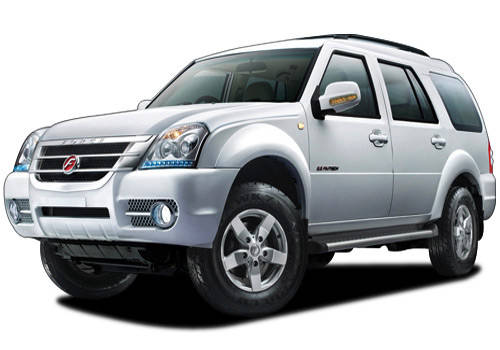
Force One SUV 4x4 Variant

Renault Duster
and Many more.....

Lets see what's more in store for us at 11th Auto Expo.

Source: Car Dekho

January 6, 2012

Total 195 news Available in 11th Auto Expo, 2012 @ Delhi

The 11th Auto Expo held at Pragati Maidan, Delhi this year from 6th January holds new surprises for its visitors. Its showing 195 new cars from a variety of manufacturers. Some of them are DC Avanti, BMW M5, Tata Safari Storme, Renault DeZir and many more.

Have a Glimpse at some of the new appearances in 11th Auto expo...
Renault DeZir

DC Avanti

Tata Safari Storme
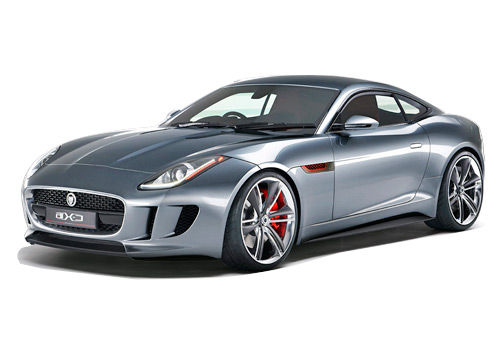
Jaguar LandRover Defender Concept 100 Sports

BMW M5

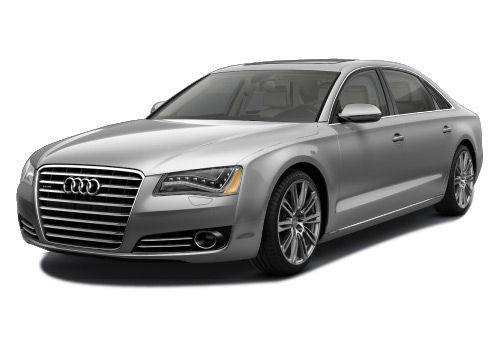
Audi A8 L Security

This auto expo is for invited or ticketed visitors only but the show is gonna be great.

Source: Car Dekho

December 7, 2011

A Better Mechanical Hand

A prosthetic hand that’s as functional as an electronic model—but at a fraction of the cost...

In The Workshop One of the inspirations for Mark Stark’s [below] invention was an artificial hand designed for NASA. “It was a challenge,” he says. “I thought, ‘I can do better than that.’" John B. Carnett

Prosthetic hands typically come in three varieties: purely cosmetic models; hooks and other low-cost mechanical appendages that provide a limited range of motion; and electronic versions that better mimic natural hand movements yet can cost tens of thousands of dollars. Mark Stark’s prosthetic incorporates the best elements of each. Although its minimalist plastic assembly is nearly as light and inexpensive as a common steel hook, it looks and moves like a high-end electronic hand.
Stark, who makes his living designing valves for dryers and other appliances, got into prosthetics in part to help his friend, Dave Vogt, who was born without a left hand. Stark’s creation is electronics-free, but its fingers each have three knuckles (two on the thumb) that bend separately to conform to anything the wearer grasps, including irregularly shaped objects that a hook can’t hold.
Hooks attach to a socket at the end of an amputee’s arm and are operated by a cable that runs up to a shoulder harness. When the wearer shrugs his shoulders, the cable pulls the hook open; when he relaxes, the cable slackens and the hook closes. The Stark Hand screws into the same socket-and-cable system but adds a lever on the palm that connects to five more cables, each running up the back of a finger. A shoulder movement triggers the lever to tug all five fingers open at once, and the individual cables let each finger rebound on its own. Springs in each joint contract until each finger comes to rest on an object, so some fingertips can curl around, say, a wineglass stem while others grasp the cup. The springs exert a level of pressure gentle enough to hold an egg but strong enough that you can lift a chair.

How It Works: The Stark Hand: The prosthetic hand attaches to a cable that runs from a shoulder harness worn by an amputee. A lever on the palm opens all five fingers at once, and separate cables in each finger and springs at each knuckle allow the fingers to close individually and bend around objects with a secure grip.  Blanddesigns.co.uk

In 2004, Stark constructed a proof-of-concept from hardware-store supplies and gave it to Vogt to try out. Within an hour, Vogt caught a ball left-handed for the first time in his life. Since then, he has helped Stark test and improve four more prototypes. Stark designed stronger, compact springs, re-engineered the fingers into a few easy-to-manufacture shapes, and set the thumb at a new angle to better replicate a real thumb. He also strengthened the joints in the hand against side impacts after Vogt broke a prosthetic knuckle when he hit something while swinging around on the dance floor.
Vogt now wears the hand everywhere except to his job as a machinist, where he has to do heavy lifting for which a hook still works better. A more durable production version, which will use tougher plastics and sleeker parts, could be on the way as early as this winter. Edison Nation, a company that helps inventors develop their ideas, recently selected Stark’s hand for commercial development and is now in talks to license it to a major prosthetics manufacturer.
Name: The Stark Hand
Inventor: Mark Stark
Time: 7 years
Cost: $17,000–$18,000

Source: Tech Gadgets

December 4, 2011

“Straddling” bus

A cheaper, greener and faster alternative to commute...


A big concern on top of urban transportation planner’s mind is how to speed up the traffic: putting more buses on the road will jam the roads even worse and deteriorate the air; building more subway is costly and time consuming. Well, here is an cheaper, greener and fast alternative to lighten their mind up a bit: the straddling bus, first exhibited on the 13th Beijing International High-tech Expo in May this year. In the near future, the model is to be put into pilot use in Beijing’s Mentougou District. (The official site of the high-tech expo put it as 3D fast bus, which I think is more confusing, for now I’ll just call it the straddling bus.)

Proposed by Shenzhen Hashi Future Parking Equipment Co., Ltd, the model looks like a subway or light-rail train bestriding the road. It is 4-4.5 m high with two levels: passengers board on the upper level while other vehicles lower than 2 m can go through under. Powered by electricity and solar energy, the bus can speed up to 60 km/h carrying 1200-1400 passengers at a time without blocking other vehicles’ way. Also it costs about 500 million yuan to build the bus and a 40-km-long path for it, only 10% of building equivalent subway. It is said that the bus can reduce traffic jams by 20-30%.
At present, there are mainly 4 types of public transits in China: subway, light-rail train, BRT, and normal bus. They have advantages and disadvantages, for example, subway costs a lot and takes long time to build; BRT takes up road spaces and produces noises as well as pollution to the air. How to develop environmental-friendly public transportation? Straddling bus provides a solution. Let’s watch a demonstration.
The straddling bus combines the advantages of BRT, it is also a substitution for BRT and subway in the future. As you all know, the majority vehicle on the road is car, the shortest vehicle is also car. Normally our overpass is 4.5-5.5 m high. The highlight innovation of straddling bus is that it runs above car and under overpass. Its biggest strength is saving road spaces, efficient and high in capacity. It can reduce up to 25-30% traffic jams on main routes. Running at an average 40 km/h, it can take 1200 people at a time, which means 300 passengers per cart.
Another strength of straddling bus is its short construction life cycle: only 1 year to build 40 km. Whereas building 40-km subway will take 3 years at best. Also the straddling bus will not need the large parking lot that normal buses demand. It can park at its own stop without affecting the passage of cars. This is what the interior looks like: it has huge skylight that will eliminate passengers’ sense of depression when enter.
There are two parts in building the straddling bus. One is remodeling the road, the other is building station platforms. Two ways to remodel the road: we can go with laying rails on both sides of car lane, which save 30% energy; or we can paint two white lines on both sides and use auto-pilot technology in the bus, which will follow the lines and run stable.
There are also two ways in dealing with station platform. One is to load/unload through the sides; the other is using the built-in ladder so that passengers can go up and to the overpass through the ceiling door.
Straddling bus is completely powered by municipal electricity and solar energy system. In terms of electricity, the setting is called relay direct current electrification. The bus itself is electrical conductor, two rails built on top to allow the charging post to run along with the bus, the next charging post will be on the rails before the earlier one leaves, that is why we call it relay charging. It is new invention, not available yet in other places.
The set here is super capacitor, a device that can charge, discharge and store electricity quickly. The power it stores during the stop can support the bus till the next stop where another round of charging takes place, achieving zero toxic gas throughout the process.

About the ultrasonic waves put forth from the end of the bus, that is to keep those high cars or trucks away from entering the tunnel. Using laser ray to scan, cars get too close to the passage will activate the alarm on the bus end. Inside the bus, there are turning lights that indicate a the bus is intending to make a turn to warn the cars inside. Also radar scanning system is embedded on the walls to warn cars from getting too close to the bus wheels.
Nowadays many big cities have remodeled their traffic signaling system, to prioritize public buses, that is to say when a bus reaches a crossing, red light on the other side of the fork will turn on automatically to give buses the right of way. Our straddling bus can learn from this BRT method. The car can make the turn with the bus if that is the direction it wants to go too; if not, the red light will be on to stop the cars beneath while the bus take the turn.
The bus is 6 m in width and 4-4.5 m high. How will people get off the bus if an accident happens to such a huge bus? Here I introduce the most advanced escaping system in the world. In the case of fire or other emergencies, the escaping door will open automatically. I believe many of you have been on a plane. Planes are equipped with inflated ladder so people can slide down on it in emergency. I put the escaping concept into the straddling bus. It is the fastest way to escape.
The bus can save up to 860 ton of fuel per year, reducing 2,640 ton of carbon emission. Presently we have passed the first stage demonstration and will get through all of the technical invalidation by the end of August. Beijing’s Mentougou District is carrying out a eco-community project, it has already planned out 186 km for our straddling bus.


source: Tech Gadgets

December 1, 2011

Glass Multi-touch keyboard and mouse

I know those tech-loving computer geeks who dream of a computer that give you the feel of digits drumming atop virtualized letters glowing out of slippery glass. This feel has until now been given by iPad and Microsoft Surface. Jason Gidding's Kickstarter project to develop multi-touch glass keyboards and mice can finally make those dreams of yours come true. The project has been fully funded and he expects to have them to market as early as April of the next year.
According to Jason, the concept is said to use existing technology to create something more advanced than current everyday gadgets. The design has been made to look simple yet elegant and  modernistic. The multi-touch peripherals have no wires and absolutely no moving parts. As the developer puts it, the gadgets are 'doughnut and coffee resistant'. This should make those computer freaks happy who have a habit of spilling something or the other over their keyboards or mouse.

Going technical, the face of each device is built using tempered glass supported by a metal base and some other components accommodating for existing technology. Powered by Rechargeable Lithium Polymer Batteries the gadgets feature tactile sounds and lighting that can be switched on or off. The entire concept utilizes Frustrated Total Internal Reflection which exploit the behaviour of infrared LEDs inside the glass surface, emitted from a point source. this is done by the diffracting or frustrating of the rays downwards, when the panel is contacted from above. the camera on the underlying surface then detects theser rays and the software configurations perform the necessary functions.

The most interesting thing about these gizmos, espescially to developers, is that the functions are customizable as an open source software is being employed since it is being the most difficult part in integrating into the OS. This is done in order to give tinkerers the ability to continue to tweak the experience.


Reported by Gizmodo, the concept devices currently feature on Kickstarter for fundraising purposes. The project requires $50,000 (approx. Rs.2,601,000) by January 1, to help them reach the production process. You can still donate $250 for a keyboard, $150 for a mouse or $350 for both though. Or you can simply keep dreaming of how good it would be to have a keyboard that cookie-chunks can't get stuck between the keys of. You toilet-seat laptop users know what I mean.

Source: Tech Gadgets

November 26, 2011

BMW Gina

The light visionary concept car...


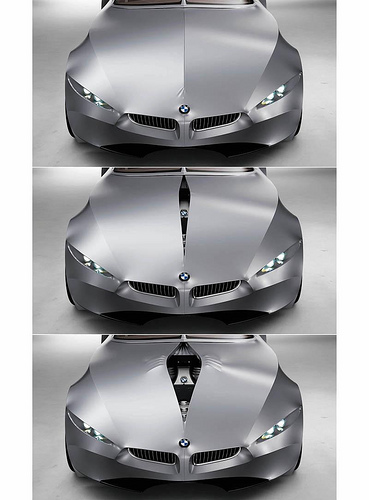
BMW recently revealed the 'GINA', light visionary model concept car, an innovative new exploration in car design. It is a fabric-skinned shape-shifting sports car. Gina stands for "Geometry and functions In 'N' Adaptations". Instead of the traditional steel and plastic body shell, the GINA concept uses a textile fabric starches over a wire frame. This unique idea allows the car’s skin to change shape, stretching to match the position and curve of the wire frame. This idea is demonstrated in the ‘blinking’; headlights and the flexibility of the car doors as they open. The project began by questioning the purpose of a car’s body and exploring new possibilities. Designed by BMW's head of design, Chris Bangle and his team, who says Gina allowed them to 'challenge existing principles and conventional processes. The construction began in 2001.

                                                        BMW Gina, BMW Museum, Munchen, Germany.


Fabric body
The flexible, stretchable, water resistant, translucent, man-made fabric skin – polyurethane-coated Spandex, is resilient and durable. It resists high or low temperatures, does not swell or shrink and the movement does not slacken or damage the fabric. The body changes its shape according to exterior conditions and speeds, and it also allows the driver to change its shape at will. The fabric is stretched over a moveable frame; essential shapes are formed beneath the skin by an aluminium wire structure, though at points where movement is needed (ducts, door openings, spoiler) flexible carbon struts are used. The shape of the frame is controlled by many electric and hydraulic actuators, for example, the headlights are revealed when small motors pull the fabric back in an eyelid like fashion. As the fabric is translucent the taillights shine through it.
Transformations
  • Exterior
GINA has just four panels — the bonnet, the two side panels and the boot. Its skin appears seamless, but it can “grow” a higher rear spoiler for stability at high speed. Its doors open in a butterfly style, and are each covered by a fabric piece reaching all the way from the nose of the car to their trailing edge which when closed leaves a perfectly smooth surface. Access to the engine can be gained through a slit that can open in the middle of the bonnet.


  • Interior
When the car is parked, the car’s steering wheel and instruments sit in an ‘idle’ position on the centre console to allow the driver easy entry. The steering wheel and instruments assume their correct positions when the driver presses the start button and the headrest rises from the seat once the driver is seated, making it easier to get in and out of the car.